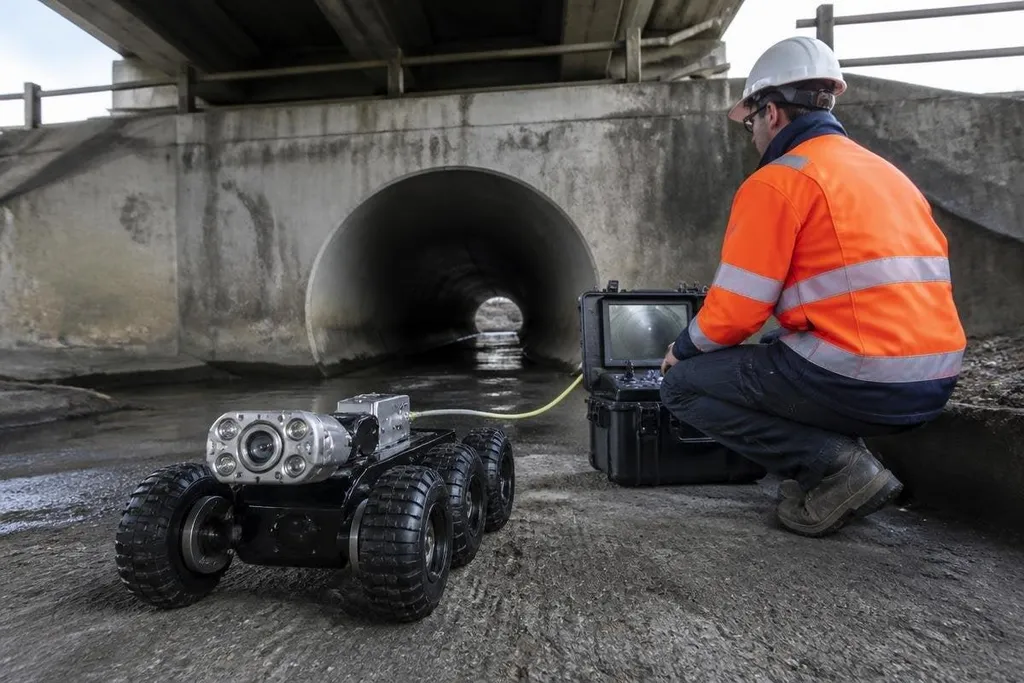
A bridge deck, sewer pipe, or power station can hide damage long before people can see it from the ground. Inspection robots bring cameras, sensors, and remote control into places that are unsafe, narrow, high, or costly to reach by hand.
Quick read
- Robots inspect confined and high areas while workers remain at a safer distance.
- Cameras, LiDAR, thermal sensors, and ultrasonic tools collect different types of evidence.
- These systems still need a clear task, a trained operator, and a plan for checking their findings.
What changes in the field
Traditional inspections often depend on lifts, scaffolding, rope access, divers, or workers entering confined spaces.
An inspection robot can move through part of that area first, giving the maintenance team images and sensor readings before anyone decides whether a closer visit is needed. That changes the order of work. A team can inspect a tunnel wall with a tracked robot, review the footage, then send people only to the sections that need a hands-on check.
The robot does not remove the need for engineers. It helps them spend their time where a human view or measurement is still needed.
Drones do the same for roofs, towers, bridges, and other tall structures. A camera can record cracks, loose panels, corrosion, or damaged insulation from a distance. The useful record is the image tied to a location, so a later inspection can show whether the defect has grown.
How the machines inspect
Different faults call for different sensors. A standard camera records visible damage, while thermal cameras can show heat differences linked to electrical faults, water entry, or missing insulation. LiDAR measures distance with laser pulses and can create a 3D map of a space.
Ultrasonic thickness gauges send sound through a material and measure how much remains between the tool and the far side. On a steel tank or pipe, that reading can help locate corrosion that a normal camera cannot see. The robot must place the sensor correctly, so movement control and contact with the surface matter as much as the sensor itself.
Some robots use wheels or tracks on flat floors. Others climb walls with magnets, suction, or a tethered system. Underwater robots carry lights and cameras below the surface, where poor visibility and water pressure make a human inspection harder.
The operator may control the robot from a nearby vehicle or a control room. More autonomous systems can follow a planned route and avoid obstacles, but a person still checks the data and decides what action follows.
Where the value appears
The clearest gain comes from repeat inspections. If a robot follows the same route and records the same points each time, maintenance teams can compare images and measurements across visits. That can help them plan repairs before a small fault becomes a shutdown.
Those records also give engineers and site managers the same file when work passes between teams. A robot can attach images, measurements, and route data to a repair record, so the next crew sees what changed since the last visit. Dated infrastructure robotics reports from Robot24.com can show when inspection tools move from trials into routine maintenance.
There is a safety benefit, too. Inspection robots can enter a pipe before a worker, inspect a damaged roof after severe weather, or check a rail area during a planned closure. The risk does not vanish, because the robot can fail, lose its connection, or miss a defect. The work plan still needs human safety controls.
Where the limits show up
An inspection robot may record a defect without explaining its cause. A crack could come from movement, corrosion, water, or a faulty repair. Engineers still need drawings, past inspection records, and material knowledge to judge what the image means.
Poor lighting, dust, mud, water, reflective surfaces, and weak network links can also reduce the quality of the data. A drone may struggle in high wind. A magnetic crawler cannot inspect a surface that is too rough, too thin, or made from the wrong material.
Data handling matters as well. A large inspection file needs clear labels, location data, storage, and a way to compare new findings with old ones. A video folder without those details becomes another manual task.
A practical buying checklist
Use these checks before choosing a system for a maintenance team:
- Name the fault first. Decide whether you need images, heat readings, surface distance, thickness data, or a mix.
- Check the route. Measure openings, slopes, surface types, water depth, lighting, and the distance from the operator to the robot.
- Set the evidence standard. Define the image quality, measurement accuracy, location data, and file format your engineers need.
- Plan for recovery. Ask how the team retrieves a stalled robot, lost drone, broken tether, or failed battery.
- Test the handoff. Make sure inspection data can reach the software and people already used for maintenance records.
- Price the whole task. Include training, transport, sensor checks, repairs, data review, and any required site permits.
I'd start with a narrow inspection task that happens often and carries a clear safety cost. That gives the team a real route, a repeatable result, and a fair way to judge the robot before adding harder sites.
The next useful measure is simple: can the system find defects, place them accurately, and produce records that change a maintenance decision? If it can do that on the same site across several inspections, it has earned a larger role.