Understanding Bridge Cranes: Definition and Functionality
In the realm of industrial material handling, bridge cranes stand out as critical tools that facilitate the movement of heavy loads across various facilities. These cranes, often deployed in manufacturing and warehousing environments, are designed to enhance efficiency and safety when lifting and transporting materials. By spanning the entire width of a workspace, bridge cranes provide a unique combination of speed, precision, and versatility that is unmatched by other lifting solutions.
What is a Bridge Crane?
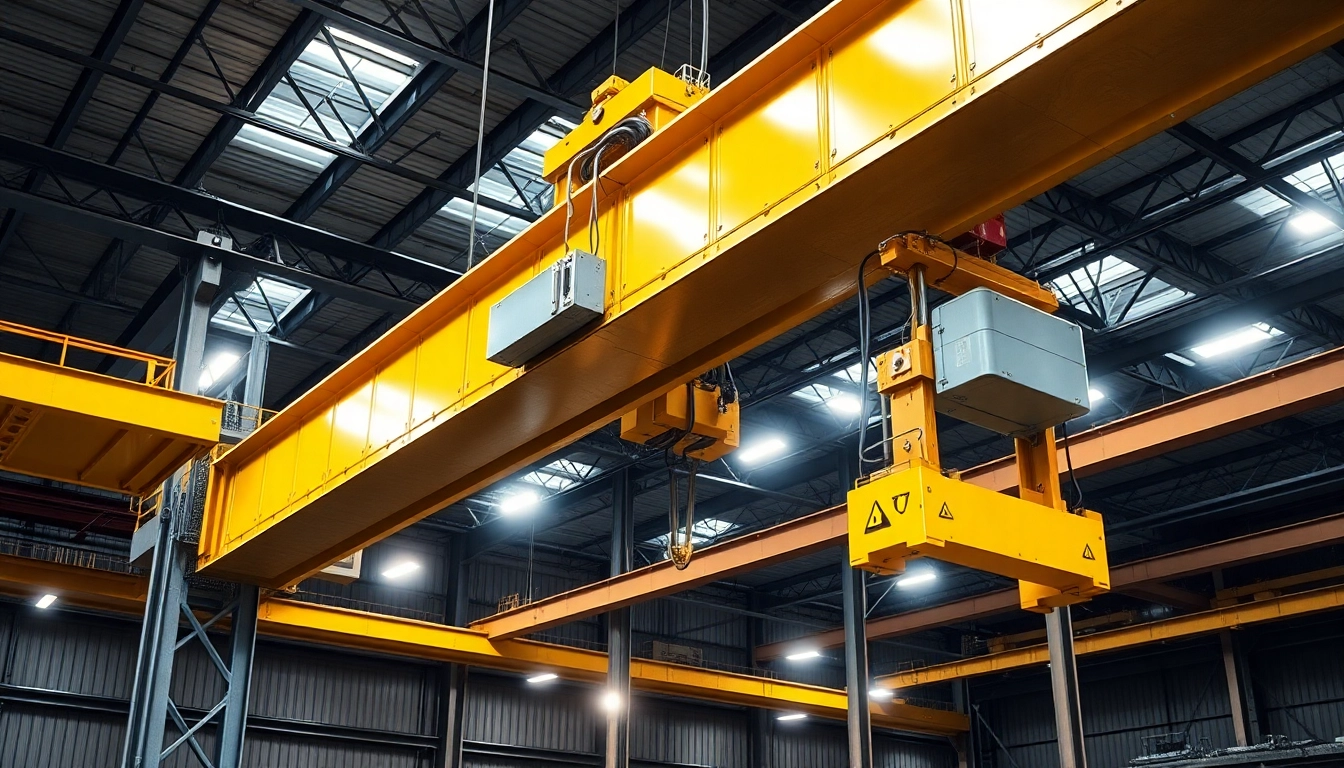
A bridge crane, commonly referred to as an overhead crane, is a type of crane that consists of a horizontal beam (the bridge) supported by two vertical columns (the runways) that travel back and forth along the length of the workspace. This configuration enables operators to lift and maneuver heavy items throughout an expansive area, making them indispensable in various industries. The flexibility and functionality of bridge cranes allow organizations to streamline their workflows significantly, reducing labor costs and increasing productivity.
Key Components and Their Roles
Understanding the key components of a bridge crane is essential for optimizing its operation:
- Bridge Beam: The main horizontal structure that spans the workspace, supporting the hoisting mechanism.
- Runways: The parallel tracks where the bridge moves, allowing lateral movement across the work area.
- Hoist: The lifting mechanism attached to the bridge, responsible for raising and lowering loads.
- Controls: Systems used by operators to manipulate the crane's movements, often featuring advanced safety features and automation options.
Common Applications in Industry
Bridge cranes are utilized in a variety of industrial applications, including:
- Manufacturing: Transporting raw materials and finished products.
- Warehouse Management: Facilitating storage and retrieval processes.
- Construction: Moving heavy construction materials on job sites.
- Maintenance: Assisting in the repair and maintenance of large machinery.
Types of Bridge Cranes and Their Benefits
Choosing the right type of bridge crane can significantly affect operations within a facility. Various designs cater to specific needs, each offering unique advantages.
Single Girder vs. Double Girder Cranes
Bridge cranes typically fall into two categories: single girder and double girder cranes. The primary distinction lies in their design:
- Single Girder Cranes: Feature a single main beam and are ideal for lighter loads and smaller spaces. They are generally more cost-effective.
- Double Girder Cranes: Comprise two beams, providing enhanced strength and stability for heavier loads. They are suited for environments requiring higher lifting capacities.
Freestanding and Ceiling-Mounted Options
Bridge cranes can also be categorized based on their installation methods:
- Freestanding Cranes: Independent structures that do not rely on building infrastructure. They can be installed in various locations and are often considered when ceiling heights are limited.
- Ceiling-Mounted Cranes: Attached directly to the building's structure, maximizing available space and minimizing the footprint on the shop floor.
Choosing the Right Type for Your Needs
Selecting the appropriate bridge crane requires consideration of several factors:
- Load Requirements: Assess the weight and dimensions of the items to be lifted.
- Space Constraints: Evaluate the workspace and determine whether a freestanding or ceiling-mounted crane is suitable.
- Operational Frequency: Consider how often the crane will be used to ensure it meets your productivity needs.
Installation and Maintenance of Bridge Cranes
Proper installation and maintenance are crucial for the longevity and efficiency of bridge cranes. Following a structured approach can prevent operational failures and safety hazards.
Step-by-Step Installation Process
The installation of a bridge crane involves several critical steps:
- Site Preparation: Ensure the installation area is level, has proper access, and meets load-bearing requirements.
- Assembling Components: Set up the runway tracks and attach the bridge beam securely.
- Installing the Hoist: Mount the hoisting mechanism onto the bridge and connect all electrical systems.
- Safety Testing: Conduct thorough checks to confirm that all components function correctly and meet safety standards.
Preventive Maintenance Best Practices
Regular maintenance is key to ensuring optimal performance and safety. Consider the following practices:
- Conduct routine inspections of all components.
- Lubricate moving parts to minimize wear and tear.
- Test safety features such as emergency stops and overload sensors regularly.
- Train personnel on proper operation and maintenance techniques.
Common Repair Issues and Solutions
Bridge cranes may experience several common repair issues, including:
- Electrical Failures: Regularly check wiring and connections to prevent malfunctions.
- Wear and Tear on Hoists: Replace worn parts promptly to avoid operational disruptions.
- Misalignment: Periodically check alignment and adjust components as needed.
Performance Metrics for Bridge Cranes
Evaluating the performance of bridge cranes involves several key metrics that influence their effectiveness in material handling.
Evaluating Load Capacity and Speed
Understanding load capacity and the speed at which a crane operates is essential for ensuring safety and maximizing productivity. Load capacities vary significantly:
- Light-duty cranes may handle up to 5 tons.
- Heavy-duty units can support loads exceeding 50 tons.
Safety Features and Compliance Standards
Safety is paramount in crane operations. Bridge cranes must meet various compliance standards, including:
- OSHA Compliance: Adhering to safety regulations to protect operators and personnel.
- Load Testing: Ensuring cranes undergo regular inspections and tests to confirm their reliability.
Measuring Efficiency in Operations
Efficiency can be gauged through several indicators, such as:
- The speed of load transport.
- Time taken for loading and unloading.
- Reduced downtime resulting from effective operational planning.
Future Trends: The Evolution of Bridge Cranes by 2025
The future of bridge cranes is bright, with technological advancements poised to revolutionize the industry. Some anticipated trends include:
Innovative Technologies Shaping the Industry
Emerging technologies such as IoT (Internet of Things) and AI (Artificial Intelligence) are set to enhance crane functionality:
- Smart Sensors: Allow for real-time monitoring and predictive maintenance.
- Automation: Increasing the efficiency of operations through automated crane systems and controls.
Environmental Considerations and Sustainability
As industries strive for sustainability, bridge cranes are also evolving to meet eco-friendly standards:
- Implementing energy-efficient motors and systems.
- Utilizing materials sourced from sustainable practices.
Preparing for the Future of Material Handling
Organizations looking to adapt to these changes should consider:
- Investing in training programs to prepare staff for advanced technologies.
- Evaluating current systems to identify areas for upgrades and enhancements.