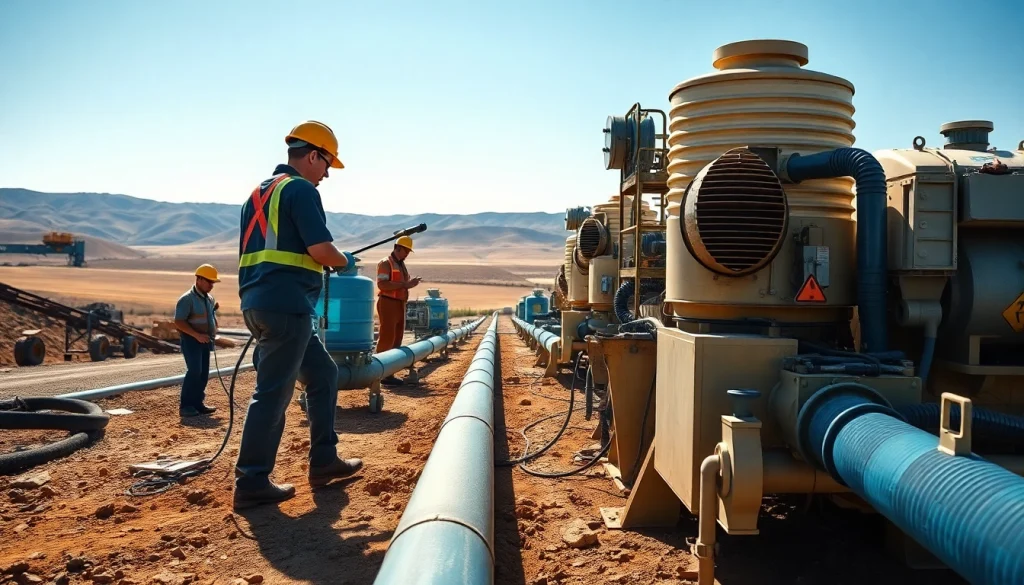
Understanding Industrial Water Transfer Services
What Are Industrial Water Transfer Services?
Industrial water transfer services involve the transportation of water resources from one location to another to meet various industrial needs. These needs could range from construction sites requiring substantial amounts of water to agricultural operations that depend on reliable water supplies for crop irrigation. Companies specializing in this field use pumps, hoses, and tanks to facilitate effective water movement over short or long distances. The services are critical in instances where access to natural water sources is limited or where large volumes are needed quickly. Utilizing industrial water transfer services helps industries maintain workflow efficiency while adhering to environmental standards.
Key Benefits of Using These Services
Adopting industrial water transfer services presents several advantages. Firstly, these services provide flexibility in water usage, enabling industries to transport water according to their operational schedules and requirements. Secondly, they facilitate quick response times, especially vital in sectors like construction or emergency management where water is needed urgently. Another significant benefit is the mitigation of environmental impact; specialized providers incorporate eco-friendly practices into their operations to reduce adverse effects on local ecosystems.
Moreover, water transfer services also ensure that industries meet regulatory compliance when extracting water from various sources. A professional service provider will navigate local laws regarding water rights and usage while ensuring proper documentation is in place. By employing experienced personnel trained in water transfer logistics, companies can focus on their core operations without getting bogged down in time-consuming regulatory matters.
Industry Applications of Water Transfer Services
Industrial water transfer services find applications across various sectors, reflecting the diverse nature of water needs in different industries. In construction, these services provide essential water for dust control, material mixing, and site sanitation. For example, large-scale contractors often require consistent water access throughout the lifecycle of a project, necessitating reliable water transfer solutions.
Another critical area is agriculture, where effective water management is crucial for irrigation, particularly in arid regions. Water transfer services can deliver water from remote sources to crop fields, ensuring consistent moisture levels and optimizing yield potential. They also play a significant role in managing seasonal water availability, allowing farmers to plan better and respond proactively.
Disaster recovery operations also rely heavily on industrial water transfer services. In the aftermath of natural disasters, rapid deployment of water can aid in both immediate humanitarian relief and long-term recovery efforts. These services ensure that affected communities receive essential freshwater supplies quickly, contributing to public health and safety.
Choosing the Right Service Provider
Factors to Consider When Selecting a Provider
When contemplating the selection of a water transfer service provider, several factors warrant consideration. Start with the provider’s experience and reputation in the industry. Look for testimonials or case studies that highlight their successful deliveries and client satisfaction levels. Additionally, evaluate their operational capabilities, including the range of services they offer, from simple transportation to complex logistics management.
Another crucial factor is the provider’s equipment quality. Ensure they have the appropriate and well-maintained infrastructure to handle various water transfer tasks. The ability to customize solutions based on specific needs is also a bonus; a competent provider will tailor their services to fit unique operational parameters.
Evaluating Service Levels and Capabilities
Not all water transfer service providers offer the same level of service. It is vital to conduct a thorough evaluation of their capabilities. Consider their response time—how quickly can they mobilize their resources to meet urgent demands? This aspect is particularly critical in emergencies or rapid construction schedules. Ask about the technologies and processes they utilize for water transfer; advanced methods can enhance efficiency and safety.
Furthermore, review their customer support services. A reliable provider should be accessible for consultations and readily available to address any emergencies that may arise during a project. The support should extend beyond delivery; proactive communication is key to ensuring that all parties are aligned on logistical aspects and any potential challenges.
Understanding Cost Structures and Pricing
Cost is a significant factor when choosing a water transfer service provider. When assessing pricing, it’s important to understand the overall cost structure and what services are included. Some providers may offer a flat rate for water transfer, while others may charge based on the volume of water transported or the distance covered.
Don’t forget to account for potential additional fees, such as setup costs, rental fees for equipment, or charges for emergency services. A clear and detailed proposal from the provider can help you anticipate total expenditures over the course of a project. Don’t hesitate to negotiate and seek clarification on any pricing elements that seem unclear.
Best Practices for Implementing Water Transfer Solutions
Planning and Logistics for Effective Transfers
Effective planning is the cornerstone of successful water transfer projects. Begin with a detailed assessment of your water needs, evaluating both short-term and long-term requirements. This analysis will inform logistical decisions, including the timing, method of transportation, and equipment needed for the task.
Collaboration with the service provider is essential during the planning phase. They can provide insights into the most efficient routes, timing for water delivery, and equipment logistics tailored to your specific operational workflow. Furthermore, establishing a contingency plan can mitigate risks associated with unexpected issues like adverse weather or equipment failures.
Ensuring Compliance with Regulations
Regulatory compliance is paramount in industrial water transfer. Different regions have varying laws governing water usage and transport, making it vital to remain informed. Work closely with your service provider to ensure that all necessary permits are obtained and that all transfers are conducted within legal frameworks.
Regular audits and tracking of water use can also aid in maintaining compliance. By documenting all aspects of water sourcing—including origins, volumes, and usage—you establish a defensible position should questions arise from regulatory bodies. Engaging with environmental specialists to stay updated on changes in legislation or best practices can further strengthen your compliance efforts.
Training Staff for Safety and Efficiency
Training is an integral part of implementing efficient water transfer solutions. Staff should be adept at using equipment correctly and understanding safety protocols associated with water transport. Regular training sessions can also keep them informed of new technologies and techniques that can enhance operational efficiency.
Conducting drills for emergency situations ensures that the team knows how to respond appropriately to potential hazards during water transfers. This preparedness not only fortifies safety protocols but also contributes to overall efficiency during operations.
Case Studies: Successful Industrial Water Transfers
Case Study 1: Large Scale Construction
In a recent large-scale construction project, a notable construction firm faced challenges in sourcing adequate water for concrete mixing, dust control, and worker sanitation. The project site was located distant from any significant water source, necessitating the adoption of industrial water transfer services.
The construction firm collaborated with a specialized service provider to facilitate a tailored water transfer solution. This involved implementing a system of pump trucks to deliver water consistently while employing monitoring systems to track usage. The result was a seamless workflow that not only maintained project timelines but also complied with local environmental regulations regarding water use. Ultimately, the project was completed ahead of schedule with enhanced efficiency.
Case Study 2: Agricultural Water Management
A prominent agricultural enterprise faced severe drought conditions that impeded their irrigation efforts. With limited access to natural water sources, they turned to industrial water transfer services as an optimal solution.
By engaging a reliable water transfer provider, the enterprise was able to source water from a distant reservoir effectively. The provider utilized a series of large-capacity tanks and pipelines to deliver water directly to the fields. Through strategic planning and real-time monitoring, the agricultural enterprise managed to sustain their crops, ultimately boosting yield and mitigating potential losses attributable to drought conditions.
Case Study 3: Disaster Recovery Operations
In the wake of a catastrophic flood, a region’s infrastructure was heavily impacted, and communities were left without access to clean drinking water. The local government mobilized disaster recovery teams and reached out to industrial water transfer service providers for urgent assistance.
The service provider established a system to transport large volumes of potable water to affected areas swiftly. They deployed tanker trucks and set up temporary water distribution points to ensure that residents had immediate access to safe drinking water. Their prompt response not only addressed critical public health needs but also enhanced community resilience in the face of the disaster.
Measuring the Success of Your Water Transfer Solutions
Key Performance Indicators to Track
To evaluate the success of your industrial water transfer solutions, identifying and tracking key performance indicators (KPIs) is essential. Consider establishing metrics related to water delivery timeliness, costs associated with water transport, and usage efficiency. Tracking these indicators over time allows for data-driven decisions about resource allocation and operational adjustments.
Another vital KPI is environmental impact. Monitoring how water transfer activities influence local ecosystems—such as water source levels and surrounding wildlife—can help assess the sustainability of your water transfer approaches.
Feedback Mechanisms for Improvement
Integrating feedback mechanisms is crucial for continuous improvement in industrial water transfer services. Engage with stakeholders who participate in or are affected by water transfer activities, including employees, contractors, and community members. Conduct surveys or hold focus groups to understand their perspectives on the efficiency and effectiveness of water transfer processes.
Using this feedback, organizations can implement targeted improvements that align with the needs and expectations of stakeholders, enhancing both operational efficiency and public perception.
Long-term Benefits of Water Transfer Services
Investing in industrial water transfer services brings numerous long-term benefits that extend beyond immediate operational needs. Enhanced reliability in water sourcing allows businesses to maintain productivity, leading to increased profitability over time. By establishing partnerships with reputable service providers, companies can capitalize on expertise that facilitates better water usage management and sustainability practices.
Furthermore, as industries increasingly face scrutiny concerning environmental impact, adopting responsible water transfer strategies can enhance corporate reputation and stakeholder trust. Such practices not only demonstrate a commitment to sustainability but can also lead to new opportunities in markets where eco-conscious operations hold value.